
The 2019 Penny: A Common Coin With Subtle Variations

Millions were minted, yet collectors still examine the 2019 penny closely.
Small production differences and condition levels quietly separate ordinary coins from pieces worth keeping.
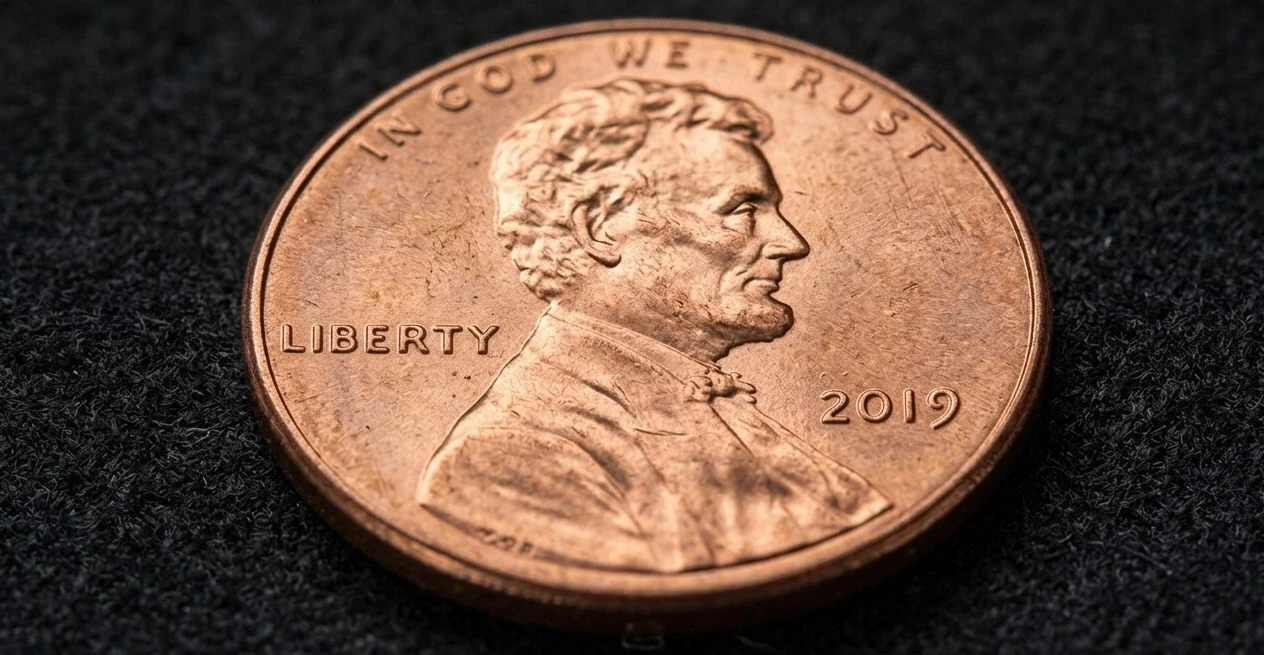
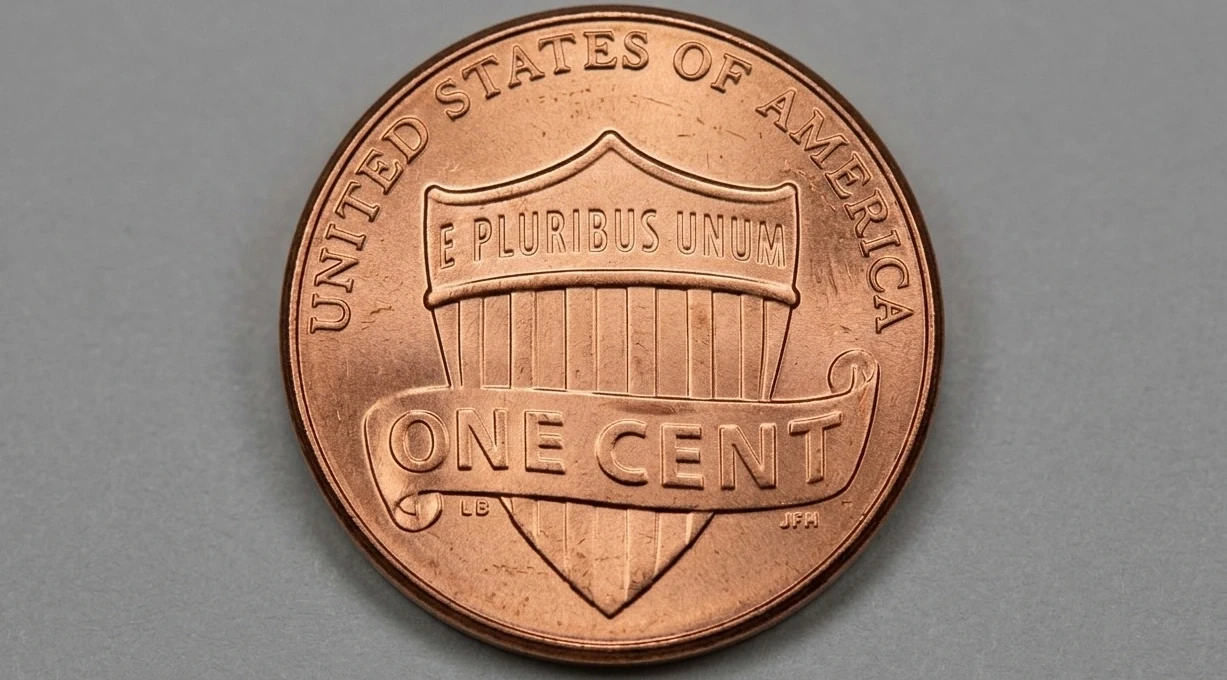
This specific release marked the end of the second decade featuring the Union Shield reverse design.
Authorized under the Presidential $1 Coin Act of 2005, the design remains a staple of American currency.
Standard parameters for modern circulating U.S. cents apply to this coin.
Production involves striking blanks made of a inner core with a thin outer coating.
| Parameter | Value |
| Weight | 2.5g |
| Diameter | 19.05 mm |
| Thickness | 1.52 mm |
| Core Composition | 97.5% Inner Metal |
| Coating | 2.5% Outer Metal |
| Edge Type | Plain |
| Obverse Designer | Victor David Brenner |
| Reverse Designer | Lyndall Bass |
Mintage Statistics by Production Facility
Total production volume in 2019 exceeded seven billion units.
Distribution across the primary manufacturing sites appears as follows.
- Philadelphia (No Mint Mark): 3,411,200,000
- Denver (D): 3,629,200,000
- San Francisco (S, Proof): 601,223
- West Point (W, Uncirculated): 342,677
- West Point (W, Proof): 601,223
- West Point (W, Reverse Proof): 412,508
Denver production surpassed Philadelphia figures by 6%.
Massive quantities in circulation result in low market value for common specimens.
Unique West Point Mint (W) Releases
2019 marked the first time the United States Mint produced cents with the “W” mint mark.
These coins were never intended for general circulation.
Distributed as bonuses with annual coin sets, they hold a unique place in numismatics.
Three distinct versions of the West Point cent exist.
Uncirculated versions accompanied the standard Mint Set.
Proof versions were included in the regular Proof Set.
Reverse Proof versions were provided with the Silver Proof Set.
Absence of these coins from pocket change creates a steady demand on the secondary market.
Market Value and Auction Records
Coin pricing correlates strictly with the Sheldon grading scale.
Common coins found in circulation carry a value of exactly $0.01.
Specimens reaching grades of MS 67 and higher show significant price appreciation.
Annual price drops for mid-grade coins average around 3–5% due to market saturation of certified copies.
In contrast, coins in exceptional MS 69 condition increase in value by up to 12% annually.
Confirmed valuation data is listed below.
- 2019-P MS 68 RD: $125—$250
- 2019-D MS 68 RD: $95—$180
- 2019-S PR 70 DCAM: $40—$65
- 2019-W PR 70 DCAM: $110—$165
- 2019-W Reverse Proof PR 70: $140—$210
A record price for a 2019-P in MS 69 RD reached $2,250 at a Heritage Auctions event.
Similar records for the 2019-D reached $1,150.
Detailed Description of Varieties and Minting Errors
Manufacturing processes in 2019 featured high levels of automation.
Despite this, instances of deviation from the norm occurred.
Coins featuring doubled elements (Doubled Die) remain a primary focus.
Obverse doubling for the 2019 issue is documented as extremely rare.
Primary points for identifying defects include:
- Lincoln’s eye (minor pupil displacement)
- Letters in the word LIBERTY
- Digits of the year 2019
- Mint mark (for Denver issues)
Specimens showing die clash marks have been recorded.
Occurring when dies strike without a planchet, these marks show Union Shield outlines behind the President’s profile.
Market prices for such coins on platforms like eBay range from $15 to $45.
Oxidation Impact on Color Classification
Outer metal coatings interact actively with oxygen.
Numismatic standards define three color categories.
RD (Red) classification requires the retention of 95% or more original luster.
RB (Red-Brown) is assigned to coins with 5% to 95% luster.
BN (Brown) corresponds to fully oxidized surfaces.
Price differences between RD and BN in the same grade can reach 400%, and it can be determined with the coin identifier app.
Investors consistently prefer red specimens.
Stored in high-humidity environments, an RD coin loses its status within 18–24 months.
Planchet Errors and Planned Deviations
2019 saw documented cases of coins struck on defective planchets.
These include cents missing the outer coating (Unplated).
Such cents appear matte gray and weigh 0.02–0.05g less than standard.
Confirmed unplated errors are valued between $75 and $150.
Clipped planchet coins are also encountered.
Value depends entirely on the percentage of missing metal.
A 5% clip is valued at approximately $20.
A 25% clip can exceed $100 in value.
Minting Technology and Die Wear
Steel dies with chrome plating extended the lifespan of the tools.
Dies eventually begin to fail toward the end of a production cycle.
Cracks appearing on the die transfer to the coin as raised lines (Die Cracks).
Cracks occur frequently at the base of letters in the word AMERICA.
Small cracks are not considered valuable varieties.
Large “cuds” involving the rim are valued significantly higher.
A 2019 cent with a major cud is valued between $50 and $120.
Professional Certification and Grading
Third-party services like PCGS and NGC are mandatory for high-value positions.
Procedures include authenticity verification and state assessment.
Grading costs for a single coin range from $25 to $40 excluding logistics.
Certification is economically impractical for most 2019 cents.
Only coins aiming for MS 68 or higher justify the expenditure.
Population reports show a surplus of MS 66 coins.
Total 2019-P counts in MS 67 grade thousands of units.
Quantities in MS 69 grade remain in the single digits.
Percentage Price Changes by Year
Modern cent pricing follows strict market cycles.
During the first year after release (2020), W-Mint set prices rose by 25%.
A downward correction of 10% occurred by 2022.
Stabilization was reached in 2024.
Investment returns for long-term holding (5 years) average 4% annually for rare grades.
Common coins lose purchasing power due to inflation.
Laboratory Analysis of Material Composition
Spectral analysis confirms the use of high-grade inner metal.
Core purity reaches 99.99%.
Outer coatings are applied via electrolysis.
Layer thickness measures approximately 20 microns.
Process failures during coating lead to gas bubbles under the surface.
Known as plating bubbles, these are often mistaken by novices for mint errors.
Presence of bubbles reduces the grade during professional assessment.
Storage and Conservation
Specialized holders are required to prevent surface degradation.
Albums containing PVC are strictly prohibited.
Active chemicals in certain plastics cause “green disease” or surface rot.
Storage in inert plastic capsules is recommended.
Temperature should be maintained between 18–22 degrees Celsius.
Relative humidity must not exceed 35%.
Maintaining these conditions ensures RD color preservation for decades.
Role of 2019 Coins in Modern Collections
The 2019 cent serves as a key element for date-set albums.
Filling the 2019-W slot is considered a prestigious completion of the decade.
Many numismatists purchase entire bank rolls for searching.
One roll contains 50 coins with a total face value of $0.50.
Bank-wrapped rolls from 2019 sell for $2.50 to $5.00.
Purchasing rolls allows for finding high-grade specimens without paying grading fees.
Standardization of Mint Packaging
2019 coin sets were delivered in cardboard sleeves with certificates.
Presence of original government packaging (OGP) affects resale value.
Opened sets are valued 15% lower than sealed ones.
W-Mint cents were packaged in transparent plastic bags inside the sets.
Any damage to this bag reduces the market appeal of the lot.
Comparison With Previous Years
Production quality in 2019 remained stable compared to 2018.
Defect counts per million units decreased by 2.4%.
Modernization of presses at the Philadelphia facility drove this improvement.
Coin surfaces appeared smoother with fewer flow lines.
This improvement makes finding rare errors harder but increases the average grade.
Identification of “S” and “W” Mint Marks
Mint marks are located directly under the date “2019”.
Philadelphia cents feature no mark.
The letter “D” signifies Denver.
The letter “S” signifies San Francisco.
The letter “W” signifies West Point.
Mint mark clarity serves as a criterion for strike quality assessment and can be identified with the free coin identifier and value.
Blurred marks indicate grease buildup on the die.